FCWC and SADC strengthen regional cooperation to tackle illegal fishing across Africa

Illegal fishing crosses national and regional borders, making cooperation between fisheries authorities essential. A new agreement between regional organisations in West and Southern Africa aims to strengthen information sharing, coordinate responses and support joint action against illegal fishing.
The Fisheries Committee for the West Central Gulf of Guinea (FCWC) and the Southern African Development Community (SADC) Monitoring, Control and Surveillance Coordination Centre have signed a Memorandum of Understanding (MoU) to strengthen cooperation and information sharing between the two regions.
The agreement was signed in Cape Town, South Africa, in November 2026, during the SADC MCS Coordination Centre's Board of Directors meeting
The partnership establishes a framework for closer collaboration between the two regional institutions, including information exchange and investigations into suspected IUU fishing and related activities, sharing of experience, joint activities and capacity building.
Stronger partnerships and information sharing
Fishing vessels may operate across multiple jurisdictions, land catches in distant ports or move between regions, making it difficult for individual authorities to build a complete picture of their activities. Timely access to vessel information and intelligence from other countries can help authorities identify suspicious activity, target inspections, and investigate potential offences more effectively.
For coastal States, illegal fishing threatens fisheries resources, undermines legitimate fishing operations and deprives governments of valuable revenue. It also has serious consequences for coastal communities whose food security and livelihoods depend on healthy, sustainably managed fisheries.
By strengthening links between their respective MCS centres, the FCWC and SADC aim to improve the flow of information between both regions and support more effective responses to suspected illegal fishing activities. The agreement provides opportunities to share operational experience, technical expertise and resources, as well as to develop joint training and investigation activities. A central priority will be ensuring that fisheries intelligence can be translated into timely and effective action by the relevant national authorities.
Turning cooperation into action
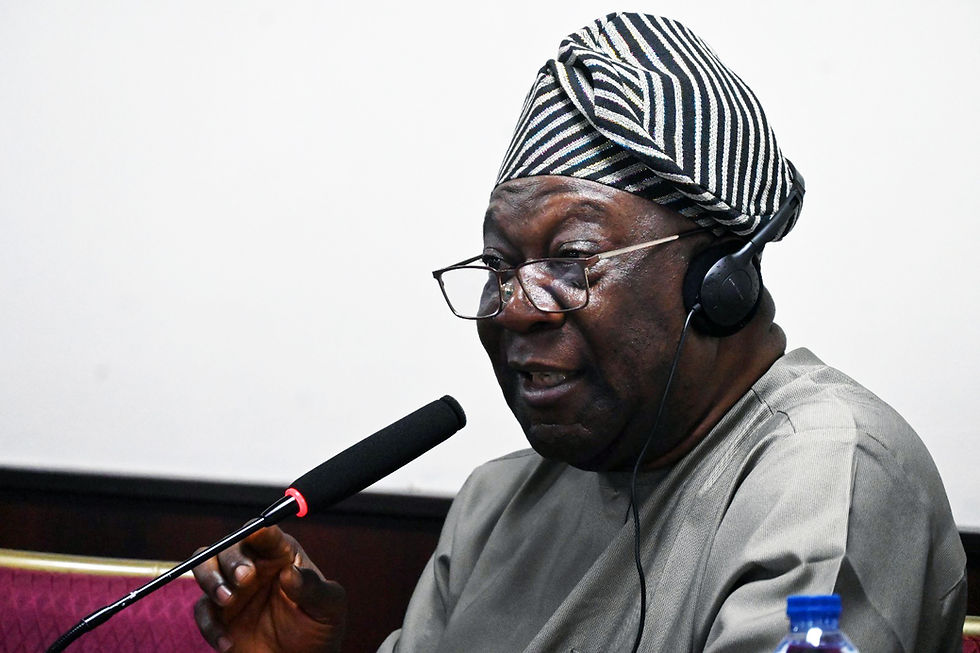
Speaking at the signing ceremony, the FCWC Secretary-General, Dr. Antoine Gaston Djihinto, emphasized the importance of moving beyond the agreement itself to establish practical activities that deliver results for Member States.
Initial steps are expected to include identifying institutional focal points, agreeing shared priorities, and developing a realistic programme of work. Regular exchanges between the two centres will help build trust, strengthen operational relationships and support the implementation of joint activities.
The partnership also offers opportunities to share lessons and approaches developed in West and Southern Africa, strengthening the collective capacity of countries to detect, investigate, and respond to illegal fishing.
Supporting regional partnerships
TMT works closely with both the FCWC and the SADC MCS Coordination Centre, supporting their efforts to strengthen fisheries monitoring, control and surveillance and tackle IUU fishing and related activities.
By supporting inter-regional collaboration, connecting institutions and strengthening information sharing and operational partnerships, TMT helps fisheries authorities work together to address illegal fishing activities that extend beyond individual jurisdictions and regions.
This agreement builds on TMT's long-standing cooperation with the FCWC, supported by the Norwegian Government, and its work with the SADC MCS Coordination Centre alongside Stop Illegal Fishing (SIF). Through these partnerships, TMT has helped bring the two institutions together and supported the development of the agreement.
"Fishing vessels operate across national and regional boundaries, but the information needed to investigate their activities is often fragmented. This agreement creates an opportunity to connect the work of fisheries authorities across West and Southern Africa, share intelligence and strengthen coordinated action. For TMT, helping make these partnerships operational is a central part of our work." Gareth Johnstone, Executive Director, Trygg Mat Tracking
During the ceremony, the FCWC Secretary-General acknowledged the contribution of these partners for their efforts in bringing the two institutions together.
The signing represents an important milestone in strengthening cooperation between West and Southern Africa. TMT looks forward to continuing to work with both centres as they translate this commitment into practical cooperation to better protect fisheries resources and the communities that depend on them.